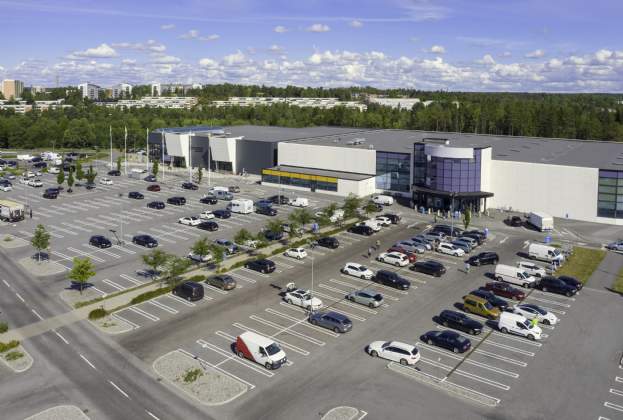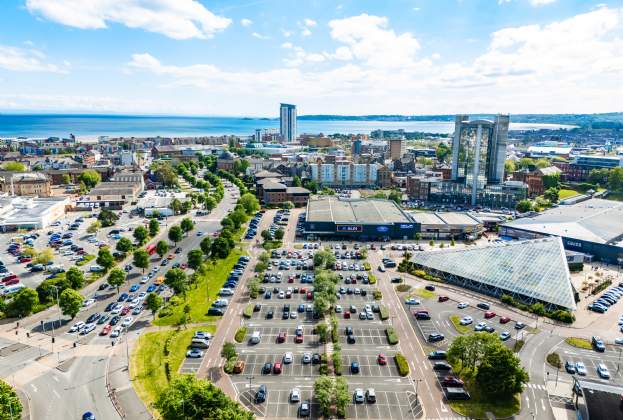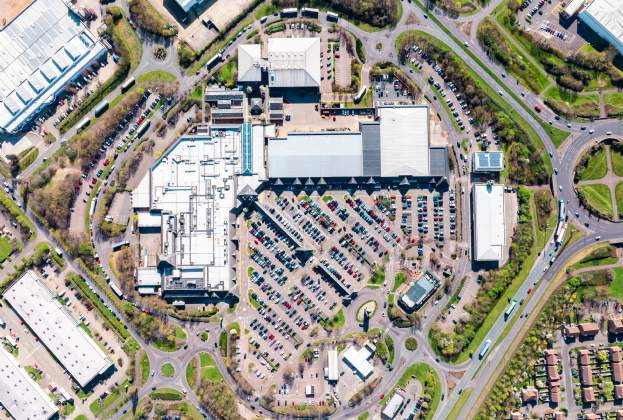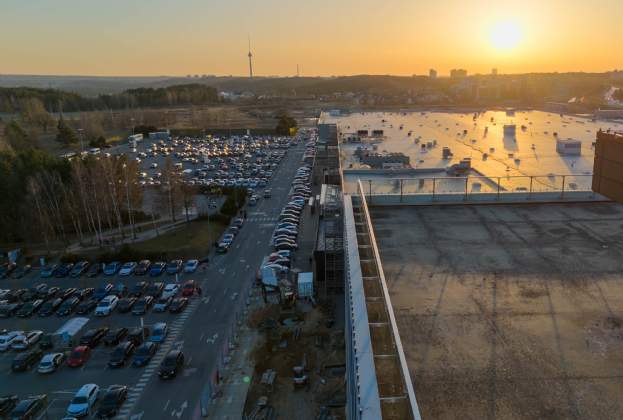
A broader occupier base, evolving consumer missions and fulfilment capabilities are expanding the role of retail parks.
Retail parks now attract a broader mix of occupiers; many geared towards everyday needs and repeat custom. F&B, health and beauty, pet care, fitness and leisure all play a role. The latter two, in particular, are often hallmarks of a maturing market. Distinct from other retail categories, they generate recurring demand that is less dependent on a specific purchase, creating reasons to visit throughout the week.
In Spain, fast-food operators are increasingly appearing alongside health and beauty brands. Leisure operators are also gaining ground, with formats such as trampoline parks helping push dwell times closer to those seen in shopping centres. In the UK, low-cost fitness brand PureGym was the second most acquisitive out-of-town non-food retailer last year. Finland has seen operators such as Liikku and Fitness24Seven broaden tenant mixes, while France has seen the number of leisure complex openings and redevelopments double in just two years.
Critically, none of this comes at the expense of the format's established strengths. What is changing is that retail parks are less dependent on large, infrequent purchases to generate footfall. Rather, the growing presence of recurring-visit categories expands the range of reasons consumers have to engage with a scheme, helping attract footfall more frequently and retain it for longer.
A hierarchy of occupier roles
Among successful retail parks, a relatively consistent hierarchy of occupier functions has emerged. Grocery and foodstore anchors generate footfall, while a core layer of discount, affordability-led and traditional bulky-goods retailers provides the commercial ballast. Beneath this sits a growing collection of ancillary uses, from health and beauty and fitness to leisure, F&B and services. Individually, these complementary functions may occupy relatively little space. Collectively, however, they can have an outsized influence on how consumers use and perceive a scheme. Though the hierarchy is unlikely to change materially, competitive advantage will increasingly be won and lost at its margins, through the mix of complementary uses layered around the core retail offer.

Blurred boundaries
The differences between retail parks and other formats remain obvious enough, yet in France, for example, polarisation is beginning to muddy the distinction. At one end sit highly functional, value-led schemes, with bazaar and discount operators accounting for a large share of rental income. At the other are premium destinations that place greater emphasis on architecture, F&B and leisure. Here, fashion is often the principal income driver, bringing them closer to shopping centres in both tenant mix and consumer appeal. The recently opened Valvert scheme is perhaps the clearest expression of this next-generation style.
Retailers, too, now appear less bound by format; the commercial logic of customer reach, economics and portfolio strategy may supersede any stigma around where certain brands ‘belong’. The current cycle has brought a greater willingness among traditionally high street-focused brands to expand out-of-town. In the UK, brands such as Next, Superdrug and M&S have become more comfortable doing so, reflecting both a more integrated approach to portfolio strategy and a broader appreciation of retail parks' advantages.
Across continental Europe, international retailers traditionally associated with shopping centres are selectively venturing out-of-town. Taking France as an example, rents are significantly lower than in shopping centres and service charges are roughly half, so the attraction is economic. Inditex recently opened the region's largest Zara flagship at Steel Saint-Étienne. Meanwhile, in Spain, the limited availability of space in prime shopping centres, combined with the strong performance of the retail park format, has led some international brands, such as JYSK, Homa and Action, to choose retail parks for their first Spanish store.
None of this suggests retail parks will become shopping centres, or that the role of the high street is diminishing in any way. It does, however, suggest that, for a variety of reasons, retailers are becoming less rigid in how they think about the space between formats.
Omnichannel and fulfilment
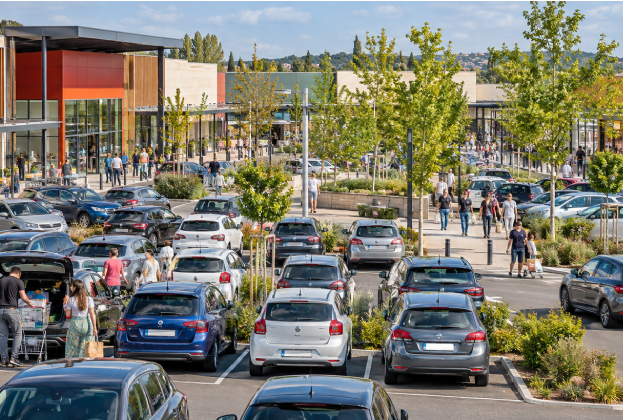
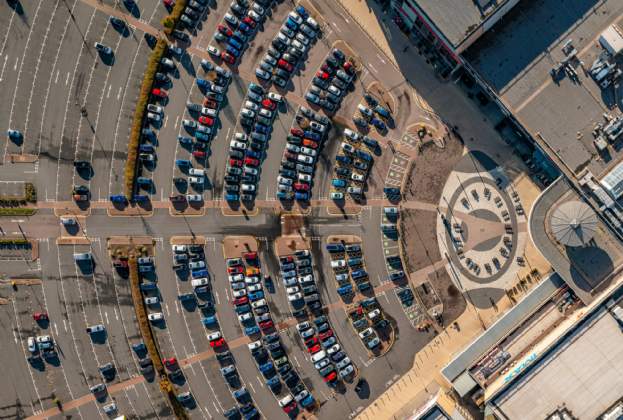
The growth of omnichannel retailing has reinforced several of retail warehousing's longstanding advantages. Out-of-town locations, easy accessibility, extensive parking and large-format units make retail parks particularly well suited to click-and-collect, returns and store-based fulfilment. Although car-dependence and exposure to e-commerce were once viewed as potential vulnerabilities, both have worked in the sector's favour as retailing has evolved digitally.
In the UK, Europe's most mature omnichannel retail market, online journeys culminating in a store visit generated meaningful sales uplifts across electricals (52%), furniture (22%) and homewares (16%) last year according to GlobalData. This points to the growing halo effect between digital and physical channels.
While many European markets remain earlier along the omnichannel adoption curve, the opportunity is much the same. As fulfilment capabilities expand, the distinction between store and warehouse becomes less defined. Large, accessible units can support stockholding, collection, returns and last-mile fulfilment, helping retailers meet consumers' expectations of a seamless cross-channel shopping journey. Each digital interaction, in turn, can create another opportunity for an in-store sale.
Read the other articles within European Retail Warehousing below