London’s protected views: what is changing?

The Savills Blog

London’s protected views: what is changing?

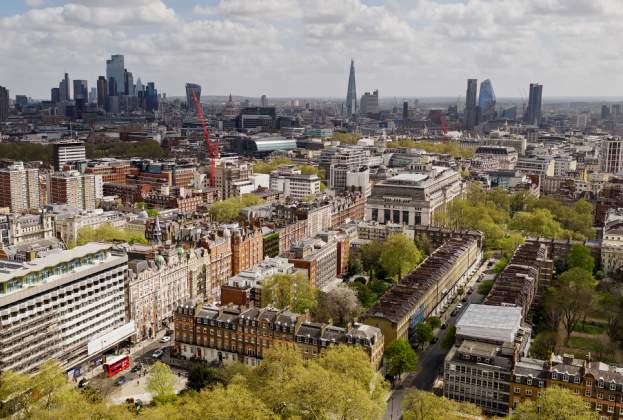
The Greater London Authority (GLA) has commissioned architectural visualisation consultants Millerhare to update and rewrite the London View Management Framework (LVMF) with a greater focus on World Heritage Sites and St Paul’s Cathedral. The work has been informed by advice from the GLA and expert panels.

Their proposed changes strengthen and extend the protection given to the capital’s famous landmarks, ensuring new development does not interfere with cherished views of the city.  

The draft LVMF was published on 11 September 2026, with the consultation closing on 4 December 2026. Responses will be considered alongside the consultation on the Draft London Plan.

The draft LVMF supports Policies HC3 and HC4 in the existing London Plan. In the Draft London Plan, these are brought together under Policy PV8. The existing LVMF will remain in force until the new London Plan is formally adopted.


Key changes to the LVMF

The new LVMF proposes several significant changes to the way London’s Strategic Views are identified and managed. The existing numbering system for viewing locations has been retained, as has the overall approach. However, very few pages of the document remain unchanged.

Strategic Views are no longer grouped into the four previous categories of ‘London Panoramas’, ‘Linear Views’, ‘River Prospects’ and ‘Townscape Views’. Instead, each view is now classified as one of three types, based on how people experience it:

  • Static: viewed from a fixed position
  • Kinetic: experienced while moving along a route
  • Panoramic: providing a wide view across the city

For Protected Vistas, the former Wider Setting Consultation Areas are now called Lateral Assessment Areas and Background Consultation Areas. These are the areas on either side and behind a protected landmark where a proposed development may affect the viewer’s appreciation of the landmark or its backdrop and, therefore, require assessment against the LVMF guidance.

The Background Consultation Areas have been refined and extended. Their length varies depending on the particular view. In some cases, the thresholds that trigger further consideration have been adjusted to reflect London’s varied topography.

The draft guidance also places greater emphasis on assessing kinetic views, which are experienced as someone moves along a particular route. It introduces a series of assessment positions along these routes. A Representative View is given to each kinetic view; however, applicants are encouraged to identify and assess points along the route that are most relevant to their specific development proposal.

More generally, the draft framework places greater responsibility on applicants to choose and justify the positions from which their proposed development is assessed. To support this, new Guidance Areas have been added to plans for viewing locations, alongside supporting photographs. Views classified as Panoramic also include defined Panoramic Areas.

There is also more detailed guidance on Protected Silhouettes, which are intended to prevent development from disrupting the recognisable profile of an important landmark. This guidance covers World Heritage Sites and, for the first time, St Paul’s Cathedral.

The Management Plans have been fully revised to improve clarity and simplify interpretation. They now include additional model views that help identify principal and secondary landmarks within each view, providing further guidance for applicants and decision-makers.

The draft LVMF updates its guidance on the selection and assessment of views, including methods for testing the potential visibility of a proposal, as well as the production of Accurate Visual Representations (AVRs). These are technically accurate images showing how a proposed development is expected to appear within an existing view.

Applicants will have greater freedom to select the camera lens used for the baseline photography, provided that the choice is clearly explained and supported within the assessment methodology.


New and revised Strategic Views

In addition to the key changes set out above, the draft LVMF amends a number of viewing locations.

The Protected Vista 2B.1, from Parliament Hill – East of Summit towards the Palace of Westminster, is proposed for removal once the new London Plan is adopted.

Several existing assessment points within designated Viewing Places have been removed. These include View 18A.3 from Westminster Bridge towards Lambeth Bridge and Vauxhall, and View 12A.2 from the northern end of Southwark Bridge, looking south-west towards Tate Modern.

A range of new viewing locations is proposed. These are introduced either as standalone static assessment points or as part of expanded kinetic routes, with the aim of offering greater protection for London’s landmarks and their surroundings.

One notable addition is a new kinetic Strategic View – View 28 – from Trafalgar Square towards the three towers of the Palace of Westminster. The view captures how the towers are experienced sequentially as people move through the square. A further new viewing position – View 27E – is proposed from the garden at the centre of Parliament Square.

Several new assessment points have also been added to strengthen the protection of the silhouette of St Paul’s Cathedral. The Protected Silhouette is defined in these views and is illustrated by the purple bars. These include:

  • an extended Kinetic View 11A, which now continues to the centre of London Bridge.
  • a revised Kinetic View 12A from the southern end of Southwark Bridge.
  • a new Kinetic path associated with View 13B from Bankside. This includes part of the riverside promenade between Blackfriars and Southwark Bridge, in front of Tate Modern and Shakespeare’s Globe.
  • View 13C from Queen’s Walk, as pedestrians emerge from beneath Blackfriars rail bridge.
  • View 16C from Queen’s Walk to the west of Blackfriars Bridge.

Protection for the Tower of London World Heritage Site is strengthened through a new Protected Vista – View 25B – from the site of the former Old London Bridge. Amendments are also proposed to Protected Vista 25A, viewed from a position opposite the Tower of London.

Two new viewing positions associated with Tower Bridge are included:

  • View 11C is introduced from the centre-north section of London Bridge, looking east, with the aim of maintaining the open view between the two principal towers of Tower Bridge.
  • View 10B is added from the southern bastion on Tower Bridge, looking west. This captures a wider composition that includes the Shard, St Paul’s Cathedral, the Monument and the Tower of London.

Taken together, the proposed changes to the LVMF place a stronger emphasis on safeguarding the setting and recognisable silhouette of London’s most important landmarks. They also introduce new viewpoints that reflect where and how people experience these landmarks as they move around the city, extending in this way the area that falls within the scope of the framework.

The introduction of Kinetic Views, together with the requirement for applicants to propose and justify assessment positions along their routes, is likely to increase engagement with stakeholders throughout the assessment process. The extension of Background Consultation Areas further increases the reach of the framework across London, which is, in turn, likely to result in a wider range of proposals being subject to consultation in relation to their effects on designated views.


Further information

Contact Richard Coleman or Xenia Georgiou

Richard Coleman, director of Savills Townscape, was involved in the preparation of the first draft of the LVMF in 2005, for Mayor Livingstone. He was then reengaged by the GLA under Mayor Boris Johnson to review and refine the framework, contributing to the adopted 2012 LVMF SPG.

Recommended articles